
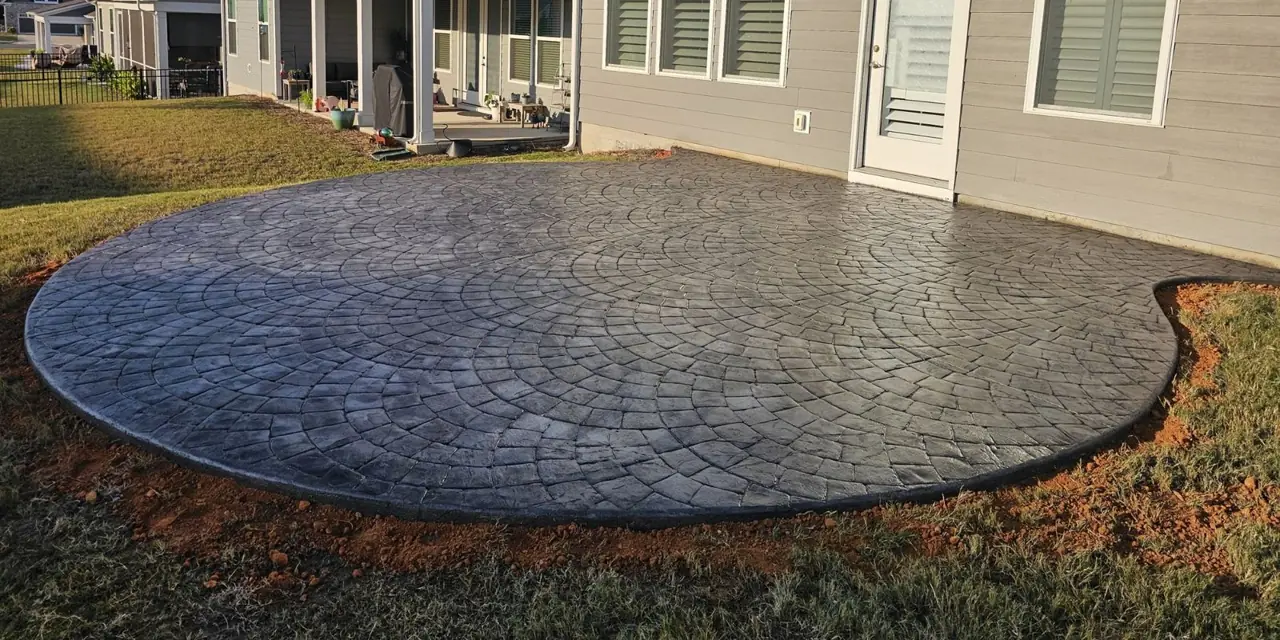
Compare finishes before choosing
Start with the way you want to use the space. A brushed texture suits a straightforward seating area; stamping adds an imprinted pattern; visible stone gives a more varied feel underfoot. The right choice balances appearance, cleaning and the design details included in the quote.
| Finish | Appearance | What to consider |
|---|---|---|
| Broom / brushed | Fine, even lines | Texture depth, easy sweeping and edge detailing |
| Stamped | A stone, slate or brick pattern | Pattern scale, chair stability and protective treatment |
| Exposed aggregate | Visible pebbles and stone | Stone shape, exposure depth and barefoot comfort |
When comparing finishes, ask each contractor to price one upgrade at a time. A defined edge may provide enough interest without covering the whole slab in a pattern. If the seating area will remain mostly open, the pattern itself may be the feature you notice most.
Concrete patios do not have to look alike. To narrow your shortlist, here are some concrete patio ideas to discuss:
- A lightly brushed center with an edge that echoes the house.
- A stone-style pattern with a contrasting band around the perimeter.
- A fine stone texture selected from a sample you have seen and touched.
These are alternatives to compare, not a ranking from good to bad. Bring pictures of the parts you like, then discuss which details belong in the work and how they affect the price.
Broom finish and plain concrete
A broom finish is created by drawing a brush across workable concrete. Fine lines provide texture without an imprinted pattern. The bristles, timing and pressure determine whether the result is light and restrained or noticeably rough.
For everyday dining, a fine brush texture can be a useful starting point. Test the feel with the shoes or bare feet you expect to use most. Deep ridges may catch crumbs and dirt, while small chair feet can behave differently on a rough sample than on a smooth showroom tile.
- Choose the texture: ask for an example of the actual brush depth.
- Set the direction: consider the main walking route and how the lines meet the edges.
- Plan the joints: decide where visible divisions will sit relative to doors, corners and furniture.
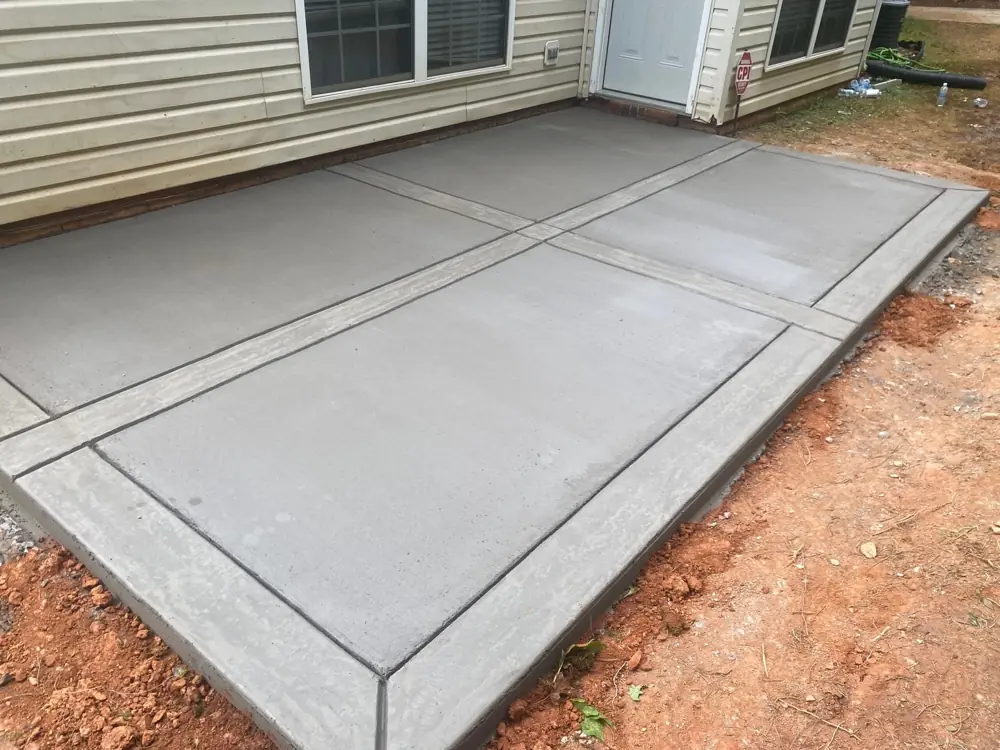
The simpler treatment usually means less specialist labor than a comparable patterned option. That does not remove the need for sound ground preparation, drainage or curing. Those parts of concrete construction should stay in the scope whichever appearance you choose.
NRMCA’s finishing guidance distinguishes exterior texture from the smooth treatment used on some interior slabs. It also explains why draining water away matters. A textured top and properly planned drainage work together; neither replaces the other.
Decorative concrete: patterns and borders
Stamped concrete is patterned with textured mats while the material is still workable. A selected stamp can suggest stone, brick or slate without installing individual paving units. Large and small patterns read differently, so compare their proportions against the width of the proposed seating area.
With concrete stamped to resemble masonry, think about the joints and borders as part of the composition. A dark edge can frame a lighter center. Several competing patterns beside an already detailed brick wall may create a busier result than you want.
Look at our stamped concrete work to compare broad patterns with the smaller details around steps and edges. Real projects help explain the difference between a picture of a stamp and the appearance of a whole installation.
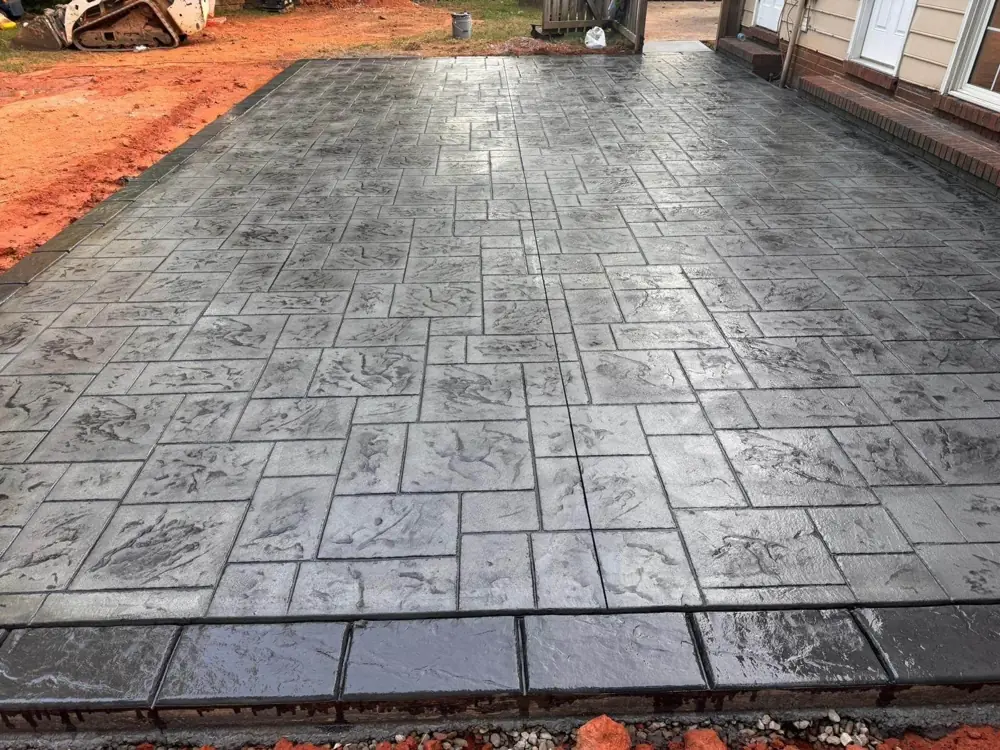
- Look at the relief: deep impressions can affect chair feet and make sweeping more involved.
- Check the proposed protective treatment: it changes the final appearance and care requirements.
- Choose the border before quoting: its width, pattern and handwork affect the scope.
If you want the highest detail option, compare the actual pattern, accent work and edges included in each proposal. Additional tooling and more complex layouts take time. A basic pattern and an elaborate custom arrangement should not be treated as the same product.
Future patching can be noticeable where an older shade or pattern is difficult to match. That is worth considering before committing to a detailed layout. For a separate comparison of poured slabs and individual units, read our stamped concrete vs. pavers article.
Exposed aggregate: texture and stone
An exposed aggregate treatment reveals selected stones rather than leaving them covered with cement paste. The result varies with the stone shape, its size and the depth of exposure. A fine reveal and prominent pebbles can look—and feel—quite different.
One method uses a retarder to delay setting at the top before the paste is washed away. Sika’s product documentation describes different reveal levels. It is useful evidence that this is a family of textures rather than one fixed specification.
- Compare the feel: a photograph cannot tell you whether the stones are comfortable underfoot.
- Try a chair: small feet or rolling furniture may need a less pronounced texture.
- Inspect the completed treatment: a sealed sample may differ from an untreated one.
Varied stone can make small marks less obvious, but it still needs cleaning. Loose leaves and dirt can collect between more prominent pebbles. For frequent barefoot use, choose from a representative example rather than assuming that additional roughness is automatically better.
Specify the stone and reveal when requesting a price. Two quotes using different materials or exposure methods may be describing very different work. Ask what is included in the sample, preparation and final treatment before deciding which is better value.
Color choices for concrete patios
Color can work with more than one texture. Integral pigments are mixed into concrete; other systems are applied at the top. The underlying texture still determines much of the feel, so choose the shade and tactile character together.
Beside a Charlotte home with brick, stone or painted siding, view samples outdoors in both sun and shade. Sika’s integral-color guidance explains that ingredients, water content, finishing and curing can influence the result. A phone photograph alone is not an exact color reference.
A contrasting border can give plain concrete more definition. Set its width and where it meets steps or an existing walk. Curves and changes in pattern add layout work, so compare the same details in each estimate.
A short sample-review checklist
- Identify the reference: does it show the proposed texture, shade and final protective coat?
- Compare pattern sizes and styles against your actual layout.
- Record the selected pattern, color and border width together.
- Confirm any sample or mockup charge before it is made.
Explore a small range of choices, then settle on one agreed reference. Several pictures with different details can leave the crew and household working toward different expectations. Keep the final selection with the written proposal.
An older installation can also show how a treatment looks after use. Compare its age and exposure with the example you are considering. Concrete changes in appearance as it cures and weathers; the reference should clarify expected variation, not promise an exact match under every lighting condition.
Concrete sealer, comfort and upkeep
An outdoor seating area needs to suit daily use. Picture the table with chairs pulled out, the route to the lawn and any wheeled furniture. A texture that feels comfortable through shoes can feel different when you regularly walk without them.
Wet conditions
Evaluate the completed surface when wet, including the proposed concrete sealer. Standing water, leaves and organic buildup affect footing. Manufacturers offer different products and compatible traction additives; gloss alone does not tell you how much grip to expect.
In a shaded corner or beside a pool, include drainage and cleaning in the discussion. Ask which treatment will be used, whether it is suitable for that exposure and where its care instructions can be found.
Sun and barefoot use
For an uncovered seating area, compare lighter and darker samples outside. Take account of the hours of direct sun and any planned shade. A selection from a color chart cannot by itself guarantee a comfortable walking temperature.
Keep the care plan short and specific
- Remove leaves, dirt and spills before they sit for long periods.
- Use cleaners compatible with the installed treatment.
- Identify the existing coating before renewing it.
- Follow product guidance rather than assuming every installation needs the same resealing schedule.
A textured surface can require extra attention around grooves. Stains beneath planters or near a grill may also need a different cleaning approach from loose debris. More aggressive chemicals or pressure are not automatically better.
Keep cleaning, renewing a protective coat and repairing damage separate in the conversation. They address different problems. Ask who to contact if the appearance changes unexpectedly and keep the selected product details with your paperwork.
What changes the installed price?
For equivalent preparation and dimensions, straightforward brushwork is usually the simpler starting point. Decorative concrete adds decisions about patterns and accents, while a visible-stone treatment adds choices about the selected material and how it is revealed. Compare complete scopes, not labels alone.
A price per square foot might describe only the finish or the entire installation. Old-slab removal, access, excavation, drainage and steps can change the total. Make sure the figure you are comparing covers the same work.
- When comparing contractors, keep the footprint and access assumptions consistent.
- List the selected finish, border and preparation in writing.
- Confirm whether demolition and haul-off are included.
- Identify the curing, sealing and cleanup work in the price.
Spend on the parts you will notice
If a large dining set covers much of the center, a defined edge may provide the detail you want. If most of the area stays open and visible from the house, the main pattern may deserve more of the budget. Compare two versions of the same layout to see the actual difference.
We discuss preparation and the selected treatment together when quoting concrete patio installation. Bring approximate dimensions, access photos and the references you like. That lets us compare options for your property instead of relying on a generic finish-only price.
Updating an existing slab
Concrete stains add color to cured material, whereas concrete overlays add a new layer over a prepared base. Staining can alter the look, but neither route is interchangeable with replacing a slab that has settled or drains poorly.
A concrete stain does not restore thickness or stop movement. Before choosing a cosmetic treatment, establish what caused any recurring cracking. The proposed repair should address that cause rather than merely cover it.
- Sound slab, unwanted appearance: discuss compatible preparation and treatment.
- Settlement or drainage trouble: assess the underlying problem first.
- Replacement proposed: compare the complete new installation, including removal.
Grinders and polishing equipment change hardened concrete mechanically; brushes, stamps and trowels shape material at a different stage. A treatment intended for interior concrete floors is not automatically suitable outside. Ask how the proposed method handles weather, traction and existing joints.
Questions before you decide
When is concrete stamped?
Stamping happens while fresh material is still workable. Once a slab has hardened, adding a pattern involves a different system or replacement. Confirm which method the proposal describes, particularly if you are comparing new work with an overlay.
Is a polished concrete finish suitable outside?
A polished concrete finish should not be selected for an uncovered area on appearance alone. Wet-use requirements differ from an interior concrete floor. Compare an exterior-appropriate textured option, and ask how the complete system performs in the intended exposure.
How do we choose for our patio?
Begin with the main use, then compare texture, appearance and upkeep. A lightly brushed finish can be a useful starting point for a straightforward layout. If you prefer more detail, use a sample and a clearly described scope to compare the alternatives.
Can a plain center have a patterned border?
Yes. A simple center with a defined band can add interest without repeating a pattern everywhere. Set the border width, edges and joint layout before installation so the estimate reflects the work you actually want.
Plan the next steps with ARG
We help homeowners plan concrete work in Charlotte and surrounding areas, from seating areas and walkways to driveways. Tell us the approximate size, how you plan to use it and whether existing material needs removing.
Bring your preferred examples and the details that matter most to you. We can discuss a patio finish alongside the layout and preparation. Request a free estimate with the form below, or call (980) 418-0023.