Concrete patio service in Charlotte
A concrete patio should fit the way you use your yard. That means enough outdoor space to pull out chairs, a clear route from the back door through the seating space and levels that let water drain without collecting against the house. We review those details before choosing the patio footprint.
Our patio installation service covers new patios, replacement of worn concrete and extensions where the existing layout can be retained. We help Charlotte customers plan the layout and choose plain or stamped concrete, then plan the concrete work around access, ground conditions and the agreed use.
Starting fresh
For an unfinished yard in Charlotte, we check the proposed levels and prepare a supported base before forming the patio. Share your outdoor furniture layout and any future changes, such as a cover or heavy equipment, early. The concrete specification should account for those plans rather than treating every backyard slab the same.
Replacing or extending
We assess existing concrete at your Charlotte home before recommending what stays. Settled sections, drainage problems and widespread damage may call for removal, while a sound slab may allow an addition. A new pour will not necessarily match the color of older concrete, even when the finishing style is similar.
We coordinate concrete through direct plant relationships and handle the installation. One Charlotte team manages the agreed scope, with concrete and labor on one invoice. Our service includes ordering the concrete for a full installation; you do not need to arrange a separate supplier.
Plan the layout before the forms go in
Furniture and walking routes
Measure more than the table itself. Allow for chairs in use, walking past a grill and reaching the yard without moving furniture. On a small Charlotte property, a modest change in shape can be more useful than simply making every edge longer.
Doorways, steps and connections
We check the relationship between the concrete, door thresholds and adjoining ground. Any steps or walkway connections should be included in the initial plan. If the route continues to a concrete driveway, its elevation affects how those surfaces meet.
Slope and water
A yard that looks flat can still hold water after rain. We review grades, downspout outlets and where runoff can go before setting the concrete levels. Tell us about damp areas or pooling you have noticed; the finished slab should not repeat an existing drainage problem.
When extending patios in Charlotte, we also review where the old and new concrete slabs meet. The connection, concrete joint treatment and finished height need to suit the conditions. Pouring beside an older section does not make the two behave as a single new slab.

Choose a finish that fits everyday use
Plain and stamped concrete offer different looks for patios. For Charlotte homes, we discuss concrete texture, color, cleaning and budget together so the finish suits how you will use the outdoor area.
Broom-finished concrete
A brushed texture is a practical option for everyday seating and foot traffic. It gives the concrete a simple appearance without a decorative pattern across the whole concrete slab. We review the concrete edge treatment and joint layout alongside the texture.
Borders and contrasting details
A defined edge can give a plain finish more character. A stamped border introduces pattern without making the entire pour decorative. Discuss its width and color before forming, particularly where the new concrete meets an existing path or an older decorative section.
Stamped designs
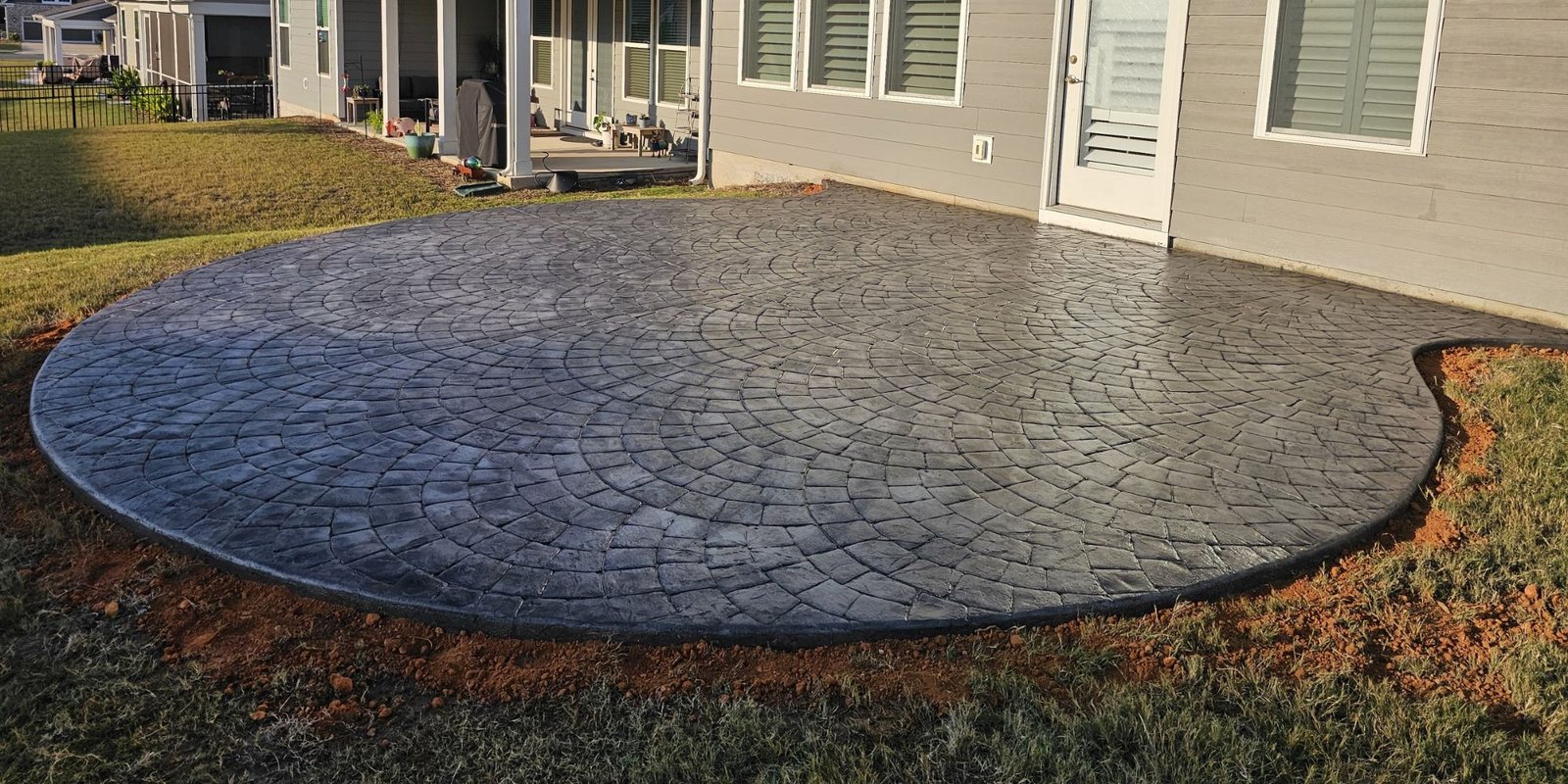
For a stone- or brick-style look, stamped concrete adds pattern to the fresh concrete. Decorative finishes also involve decisions about color, traction and future sealing. We review those with you before scheduling; a patterned finish is not maintenance-free.
If you are choosing between poured concrete and concrete pavers, consider future access as well as appearance. Individual units can be lifted and replaced, while a poured slab may show repairs. Poured slabs and paved patios both depend on suitable ground preparation. We can explain the concrete option for your Charlotte home without promising that a decorative finish fixes a weak base.


How we prepare and pour
Confirm access and the base
We agree the concrete removal scope, equipment route and material access before starting. Let us know about narrow gates, landscaping and the condition of the driveway used to reach your backyard. Access can affect how concrete is placed and how excavated material leaves the site. If the route crosses a narrow driveway or recently placed concrete, tell us before the crew arrives so we can discuss protection and staging.
For Charlotte patios, our team prepares the ground and support for the concrete, checks the planned elevations and sets the forms. Concrete thickness and reinforcement depend on the intended use. Unlike driveways, a backyard patio is not ordinarily planned around vehicle traffic; a hot tub or other heavy load still needs to be considered separately.
Place and finish the concrete
Our team coordinates the concrete delivery and pour, then finish the material in the style you selected. A broom finish and stamped concrete require different finishing steps and timing. We plan joints with the layout so the decorative details do not take the place of movement control.
Charlotte heat, wind and rain can affect the pour. We discuss the concrete schedule and conditions with you rather than treating the date as independent of the weather. Our guide to the best time to pour concrete covers those considerations.
Protect it while it gains strength
Finishing is not the same as being ready for furniture. We explain how to protect the fresh concrete on your patio and when it can be used, based on the material and conditions. Keep pets, foot traffic and deliveries away from the concrete until the appropriate stage.
For stamped concrete, any cleaning and protective treatment also need to follow the selected system. We discuss the remaining steps before you move furniture onto a new patio in Charlotte, including care for the decorative color and texture.
Patio costs in Charlotte
A concrete patio price starts with the site and scope. A 12-by-12-foot layout is 144 square feet; a 20-by-20-foot layout is 400. Those measurements help estimate concrete quantities, but they do not show the preparation, access or concrete finish involved.
Preparation and removal
Existing concrete, unsuitable soil, roots and changes in grade can affect the amount of work. We review those conditions before pricing the concrete work. If removal or haul-off services are needed, they should be clearly included in the concrete price rather than assumed.
Shape and finish
Curves, steps, borders and decorative patterns involve different forming and finishing work. A simple rectangle with a brushed finish is not directly comparable to a stamped concrete design with several colors. Compare the same dimensions and concrete specification before comparing totals.
The whole project
Include connected paths, steps and any related concrete services in the first discussion. In Charlotte backyards with restricted access, the route for material and equipment also matters. A separate driveway improvement should be identified in its own scope rather than hidden inside another price.
When reviewing bids from concrete contractors, check the base preparation, thickness, reinforcement, joints, finish and cleanup. Ask what happens if ground conditions change the work after removal. Your patio contractor should explain what the agreed price covers before the concrete is ordered.
Send the address, rough dimensions and a few photos for a free quote. We provide residential concrete services in Charlotte and nearby communities, including Huntersville, Concord and Gastonia. If you already have a layout or HOA requirements, include them when describing the work.
Questions from Charlotte homeowners
Can you work with an existing concrete patio?
We inspect its condition, height and drainage before recommending an extension or replacement. A stable section may be retained, but new concrete cannot correct movement underneath an older slab. For Charlotte homes with repeated settling or pooling, the cause matters more than covering the visible damage.
Can I add a roof, hot tub or heavy feature later?
Tell us about those plans before the pour. A basic seating slab should not be assumed to support structural posts or heavy equipment. Share the proposed feature and its requirements so any necessary support can be planned before the concrete is placed. Separate specialist services may be needed for the feature itself.
Do I need permits or HOA approval?
Requirements depend on the address and scope, particularly when the work involves a cover, structural connection or changes near property boundaries in Charlotte. Check the applicable Charlotte approvals and community rules before finalizing the layout. We discuss the concrete scope alongside any approved plans rather than promising that every project is permit-free.
How do I care for the finished concrete?
Clean spills and leaf buildup from the concrete, keep drainage routes open and avoid dragging heavy items across the finish. Stamped concrete may need attention to its protective treatment over time. Ask your concrete contractor about care for the product used; repeated coats over dirt or failing material are not a substitute for preparation.